A complete call experience.
Incoming, waiting, and in-call Compose screens are ready to use. Audio routing, mute, camera controls, and the call lifecycle live in the SDK.
DirectStream SDK · Android
Bring one-to-one video calls to your Android app. DirectStream takes care of the call experience, from the first ring to the last goodbye, so a small team can stay focused on its app.
Android 11+ · Kotlin · Jetpack Compose · Apache 2.0
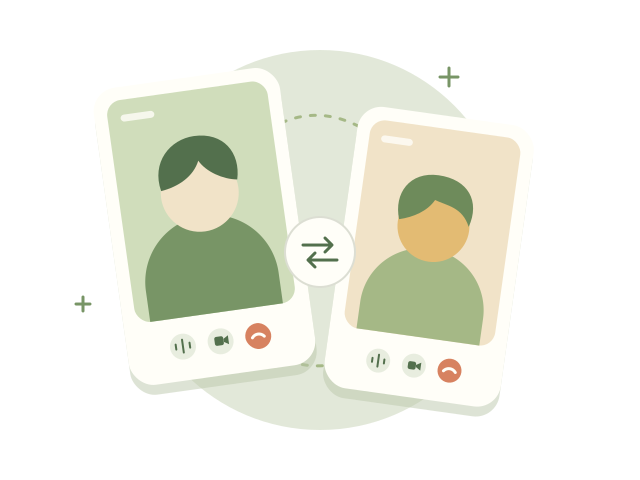
Incoming, waiting, and in-call Compose screens are ready to use. Audio routing, mute, camera controls, and the call lifecycle live in the SDK.
Use your Material theme, replace the call content, or build a custom interface with observable state and focused APIs. Your accounts and contacts stay yours to design.
Explicit call acceptance, incoming alerts, and Android system call integration connect the experience from invitation through hangup.
Device-aware by default
VP8, H.264, VP9, and AV1 negotiation is built in. Auto mode checks what both devices can encode and decode, then prioritizes a mutually hardware-supported codec.
Auto priority when both devices report hardware support
Compatible first. Hardware-aware when available.
Availability comes from the bundled WebRTC engine on each device. Without a shared hardware option, Auto uses a compatible fallback. Software implementations may be used where exposed; every codec is not available on every device.
From invitation to conversation
The default provider coordinates identity, approval, and signaling in the cloud. Once a call is accepted, WebRTC connects the media between devices, directly when possible.
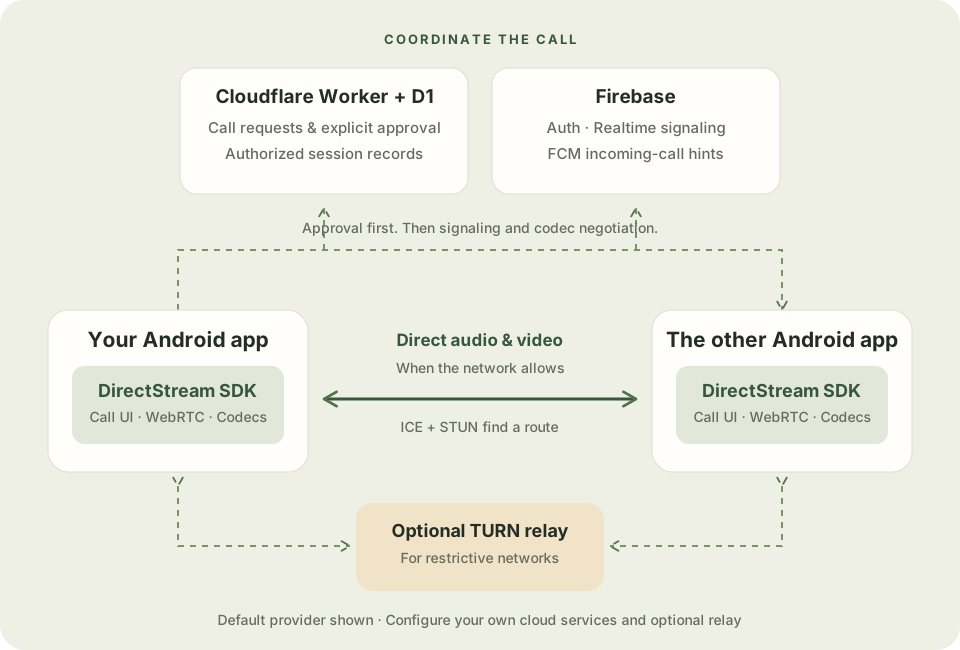
Your app selects the recipient. The provider authorizes the request, and the other person chooses whether to accept.
The SDK exchanges signaling and codec capabilities. Both devices agree on a compatible media format before capture starts.
ICE and STUN help find a direct route. A configured TURN relay can carry media when restrictive networks prevent a direct connection.
Easy to bring into your project
The Maven Central starter brings the runtime, Compose call UI, and default Firebase provider together. Add DirectStream to an existing Android app without assembling each SDK module yourself.
View on Maven Centralio.github.orthoepiccrown0:directstream
Your host app supplies Compose and FCM dependencies. The default provider requires your Firebase and Cloudflare services; TURN is configured separately. The SDK also supports custom providers.
A calling feature for the app you’re already building.